Black Friday and Cyber Monday bring a rush of real deals, and a matching rush of fake ones. The Government of Canada and its federal partners, including the Communications Security Establishment (CSE) and the Canadian Anti-Fraud Centre (CAFC), warn shoppers every year to expect scams around the holidays. This guide covers what to check before you buy, how to pay, and what to do if something goes wrong. Sources are listed at the end.
Why this matters
The CAFC received 116,408 fraud reports in 2023, with reported losses of more than $575 million. Online merchandise fraud made up about $12 million of those losses, according to figures quoted in the federal holiday-shopping warning. Reports are only a fraction of what happens, because many people never report a scam.
Warning signs on a shopping site
The federal partners point to several red flags:
- Prices that are far too low to be believable.
- A complicated or unusual payment process.
- Missing return, privacy or contact information.
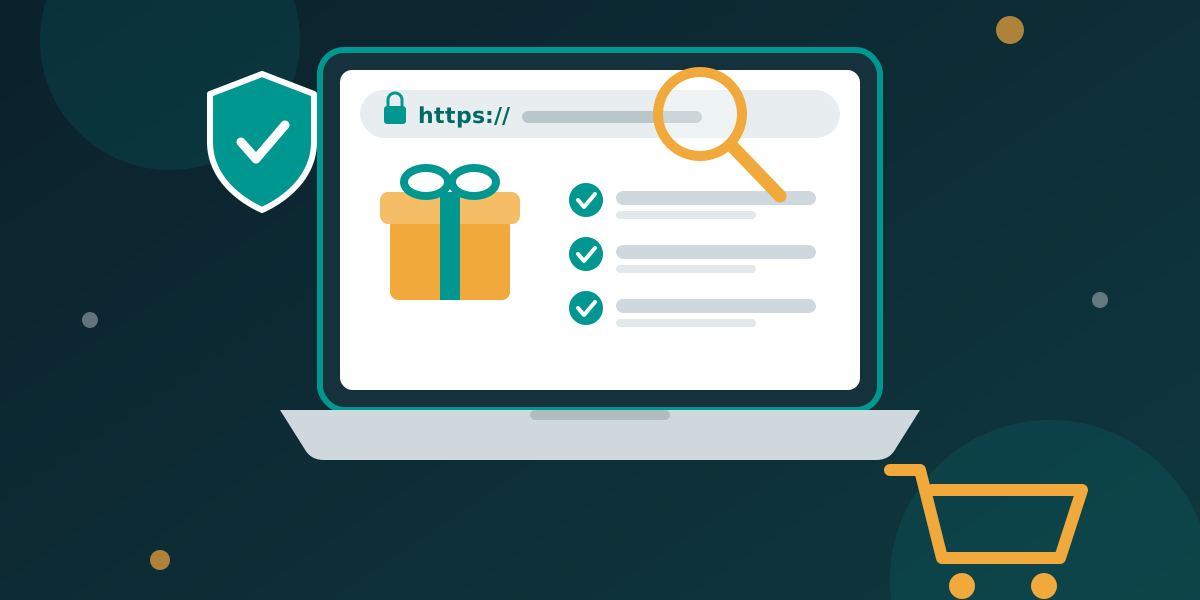
- No padlock or https:// in the address bar. A padlock alone does not prove a store is honest, but a missing one is a reason to stop.
- Typos or odd spellings in the web address, such as one letter swapped in a familiar store name.
Before you buy
- Buy from retailers you know. If you try a new store, research it and read reviews from more than one place.
- Type the address yourself or use a bookmark, not a link in an ad, text or email.
- Do not save your card details in the browser. The federal guidance advises against it.
- Use your own Wi-Fi or mobile data (or a VPN) for shopping, not public Wi-Fi.
How to pay
The CAFC advises using a credit card for online purchases, since card issuers generally have a dispute process. It also warns that a seller who asks for payment in gift cards is a scam. Gift cards are not a normal way to pay a business.
Texts and emails about deliveries
Fake shipping notices and phishing messages are a common holiday scam. If you get a message about a late or missing parcel, do not tap the link. Open the retailer’s or courier’s website yourself and check the order there.
If you think you were scammed
Contact your bank or card issuer right away. Then report it to the Canadian Anti-Fraud Centre at 1-888-495-8501 or through its website, antifraudcentre-centreantifraude.ca.
For business owners
Staff who shop online on work computers, and businesses buying supplies or software in November, face the same risks. Keep work devices updated, use multi-factor authentication on accounts, and tell staff to report suspicious messages instead of clicking.
Want a hand?
Tachyon Business & Computer Solutions helps businesses in Vernon and across the Okanagan keep their computers and accounts safe. Contact us and we will talk through what fits your business.
Sources
All checked October 29, 2026.
- Government of Canada and Communications Security Establishment, Shoppers beware of cyber scams this Black Friday and Cyber Monday (November 28, 2024)
- Canadian Anti-Fraud Centre, The 12 Scams of the Holidays (as published by the Financial and Consumer Services Commission of New Brunswick, 2020)